A City’s Green Heart: How Delhi’s ‘Waste to Wonder’ Park Redefines Urban Magic

The crisp, cool air of a Delhi winter is a unique delight. It’s the season when the city truly comes alive, inviting you to step outside and rediscover its charm. This year, my family and I decided to trade the warmth of our blankets for an urban adventure, a journey to a place that promised not just beauty, but a powerful message. It was a crisp Saturday morning when my sister, my aunt (Mausi), my father, and I embarked on a trip to the Waste to Wonder Park, a destination that had been on our list for a long time.
We navigated the efficient Delhi Metro, a city lifeline, to the Hazrat Nizamuddin Metro Station on the Pink Line. The park is a mere 700-meter walk from there, a short stroll that builds a sense of anticipation. As we approached, a sense of wonder began to settle in. This wasn’t just any park; it was a testament to human ingenuity and the profound possibilities of urban sustainability.
The Vision: From Discarded to Dazzling


Nestled in the heart of New Delhi, The Waste to Wonder Park is more than just a tourist attraction; it’s a bold artistic and environmental statement. Conceived and developed by the South Delhi Municipal Corporation (SDMC), the park was inaugurated in February 2019 and quickly became a symbol of the city’s commitment to the Swachh Bharat (Clean India) mission. The concept is simple yet breathtakingly ambitious: to take 150 tons of industrial and domestic waste – from old car parts and metal sheets – to bicycle chains and scrap benches and transform them into stunning replicas of the Seven Wonders of the World.
What’s truly remarkable is the speed and vision with which it was executed. The project was conceived and completed in just six months, a lightning-fast turnaround for a public space of this magnitude, costing ₹7.5 crore. As we stepped through the entrance, we weren’t just visitors; we were witnesses to a powerful act of creative recycling, where discarded fragments of a commercial world were reborn as masterpieces.
- Timings & Entry: The park is open Tuesday to Saturday, 11 am to 11 pm, and Sunday, 10 am to 10 pm. It remains closed on Mondays. The entry fee is incredibly affordable, making it accessible to all: ₹50 for adults and ₹25 for children (ages 3 -12). Entry is free for municipal school students and senior citizens, further underlining its inclusive vision.
A World Tour in Scrap
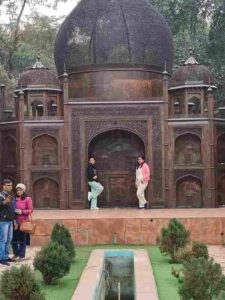


The heart of the park lies in its awe-inspiring sculptures. Standing before each one, you can’t help but be mesmerized by the intricate details and the sheer scale of the achievement. It’s a surreal experience to see global landmarks recreated with materials that tell a story of their own.
- The Statue of Liberty (USA): Standing tall at 35 feet, this replica of the iconic American symbol of freedom is a powerful sight. A closer look reveals a mosaic of discarded railings, pipes, rims, and metal sheets, each piece contributing to the statue’s majestic posture. It’s a powerful metaphor: just as the original statue welcomes new beginnings, this one represents a new chapter for waste itself.
- Christ the Redeemer (Brazil): I was particularly fascinated by this sculpture, which was a highlight for my family. Created by Vadodara-based artist Shubham, the details are incredible. We noticed how the statue’s pedestal was ingeniously crafted from the square pipes of old benches, giving new purpose to a piece of everyday life. The 25-foot statue, made from engine parts, electric poles, and bike chains, stands with an open-armed embrace that feels both serene and deeply moving.
- The Taj Mahal (India): People often say the Taj Mahal tells a story of love, and this replica is no different. It tells a story of creative passion. We were captivated by the delicate architecture, which made it hard to believe it was made of scrap. We learned that over 1,500 cycle rings were meticulously used to form its structure, their circular patterns creating a beautiful, almost lace-like texture. The sun glinting off the metal gives it a unique brilliance, a modern-day ode to the original white marble.
- The Great Pyramid of Giza (Egypt): The mystique of the pyramids has always captivated me. Here, a scaled-down version captures that same sense of awe. The geometrical precision and sheer bulk of the pyramid, constructed from an assortment of scrap, speak to the universal human drive to create something grand and lasting.
- The Eiffel Tower (France): As the most romantic wonder of the world, the Eiffel Tower’s replica felt surprisingly elegant. Created by artist Sandip Pisalkar, its intricate lattice work is a masterpiece of upcycling. Weighing around 40 tons, it’s a monumental structure built entirely from discarded waste from the automobile industry. It was a popular spot for photos, and watching couples pose in front of it felt like a little slice of Paris right here in Delhi.
- The Leaning Tower of Pisa (Italy): This 39-foot-tall sculpture perfectly captures the iconic tilt of the original. Its construction is a fascinating study in engineering and creativity. We could identify cable wire wheels, automobile parts, truck metal sheets, and even old clutch plates and C channels expertly welded together to bring this famous architectural oddity to life.
- The Colosseum (Italy): The largest amphitheater in the world is reborn here with stunning detail. Comprising eleven tonnes of scrap – from spare parts and metal rings to gears and old car wheels – the sculpture’s grandeur is undeniable. It’s a humbling reminder of human resilience and the ability to rebuild, reinvent, and create beauty from destruction.
More Than Just Art: An Experience


Our visit was about more than just the wonders. The park offers a complete experience for families and individuals alike.
- The Dinosaur Park: A major highlight, especially for the younger visitors, is the Dinosaur Park. Towering, scrap-metal dinosaurs roar (in our imaginations, at least!) to life, their bodies made from the shells of old cars and other mechanical parts. The information boards scattered throughout the section provide fascinating facts about these prehistoric creatures, turning a fun attraction into an educational one. My dad particularly enjoyed the slides integrated into the dinosaur structures, showing that even these monumental sculptures are designed for play.
- Leisurely Strolls & Serenity: Beyond the main attractions, the park’s lush greenery and well-manicured pathways offer a peaceful escape from the city’s hustle. We found a perfect arch-shaped seating area around a water fountain, a tranquil spot for a family conversation and a moment of quiet reflection. It’s a place where the sound of the city fades, replaced by the gentle rustle of leaves and the distant chatter of happy visitors.
- Photography Paradise: As a photography enthusiast, I was in heaven. Every angle, every texture, every play of light on the metallic surfaces presented a new opportunity for a striking shot. I focused on the intricate details – the weld marks, the rust, the subtle color variations – that told the story of each piece’s former life. It’s truly one of the most unique backdrops for photography in Delhi.
- Satisfy Your Cravings: To top it all off, the park has a great eatery area. After our long walk, we indulged in some delicious Delhi Street food. From traditional chhole kulche to hot pizzas, there was something for everyone to satisfy our cravings.
A Call to Action


Our visit to the Waste to Wonder Park was more than just a fun outing; it was a powerful lesson in sustainable living and the boundless potential of human creativity. It stands as a powerful symbol of what a community can achieve when it chooses innovation over indifference.
Today, you might be a visitor, admiring the masterpieces created from what was once considered trash. But the real magic lies in the subtle shift in perspective it inspires. The park nudges us all to think about our own contribution to a sustainable future. It asks us to look at discarded items not as waste, but as a potential resource.
So, if you’re looking for a unique and meaningful outing in Delhi, I highly recommend a visit. Go, take a moment to appreciate the genius behind these creations, and let their story inspire your own. Share your experience with us in the comments – we would love to hear your thoughts on this remarkable journey from scrap to spectacular.